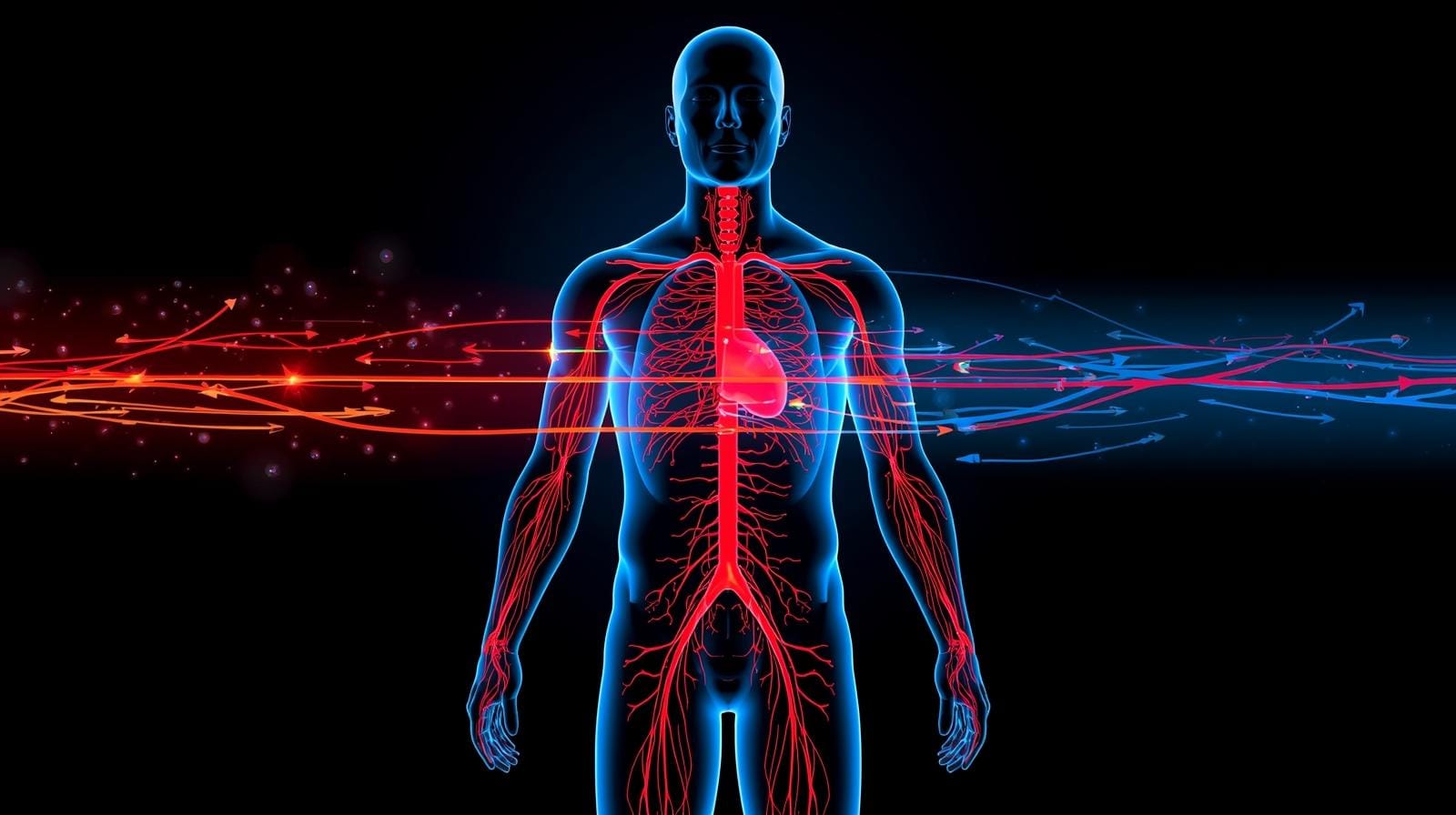
Most people approach fitness backwards.
They chase weight, intensity, and exhaustion before they’ve ever prepared the system that makes training productive: circulation.
Before the body can build strength, burn fat, or recover efficiently, it must be able to move blood, oxygen, and lymph freely. Without that, load doesn’t create adaptation—it creates compensation, inflammation, and eventually pain.
That’s why, at AW Fitness Club, we live by a simple rule:
Move first. Load second.
Circulation Is the Gateway to Adaptation
Every adaptation you want from training depends on circulation:
- Oxygen delivery to working tissue
- Nutrient transport to muscles and joints
- Removal of metabolic waste
- Hormone signaling and recovery processes
If blood flow is restricted, sluggish, or uneven, the body cannot adapt cleanly—no matter how hard you train.
This is why people can lift heavy, sweat hard, and still feel:
- Tight
- Inflamed
- Chronically sore
- Stuck at the same body composition
The issue isn’t effort.
The issue is circulatory readiness.
Why Load Without Circulation Breaks the Body
When load is applied to a poorly circulated system:
- Muscles compensate for stiff joints
- Tendons absorb stress they aren’t prepared for
- Lymphatic waste accumulates
- Recovery slows
- Pain becomes normalized
Over time, the nervous system associates training with threat instead of adaptation. Progress stalls—not because the person is weak, but because the system is overloaded too early.
This is why so many people feel “beat up” by fitness.
Movement Is Not a Warm-Up — It Is Training
Walking, light locomotion, and low-load movement are often dismissed as warm-ups or “not real training.”
That’s a mistake.
These movements:
- Increase capillary perfusion
- Improve oxygen exchange
- Stimulate lymphatic flow
- Prime joints and connective tissue
- Calm the nervous system
In other words, they prepare the internal environment so that later stress actually produces results.
At AW Fitness Club, movement is not filler.
It is foundational work.
The Lymphatic Piece Most People Miss
Blood has a pump—the heart.
The lymphatic system does not.
Lymph moves only when you move.
If you don’t walk, squat, breathe deeply, and rhythmically move your body:
- Waste accumulates
- Inflammation lingers
- Recovery slows
- Joints feel stiff and “rusty”
Circulation-first training ensures the body can clean itself before asking it to rebuild.
Why Circulation First Makes Training Feel Easier
When circulation improves:
- Muscles receive oxygen sooner
- Fat oxidation increases
- Recovery between sets improves
- Joints move more freely
- Training feels smoother, not grindy
This is why people who prioritize circulation often report:
- Less pain
- Better endurance
- Faster recovery
- Improved body composition without chasing intensity
The work didn’t get easier.
The system got more efficient.
How This Shows Up in Practice
This principle is why AW Fitness Club emphasizes:
- Daily walking
- Tiptoe Walks (TT)
- Realwalks (RW)
- Breath-led movement
- Low-load, high-quality repetitions
These aren’t accessories to training.
They are what make training sustainable.
Only after circulation is established do we layer in strength, tension, and complexity.
The Real Order of Operations
- Circulation
- Mobility
- Control
- Load
- Adaptation
Skip step one, and everything above it becomes fragile.
The Bottom Line
You don’t need more intensity.
You need better circulation.
Move blood.
Move oxygen.
Move lymph.
Then—and only then—does load become productive instead of destructive.
This is why movement comes before load.