How Movement, Inflammation, and Nutrition Drive Joint Repair
For years, people have been told:
“Cartilage doesn’t heal.”
“Once it’s gone, it’s gone.”
“You’ll just have to manage it.”
That belief has shaped how millions approach joint pain.
Rest it.
Brace it.
Inject it.
Avoid loading it.
But here’s the truth:
Cartilage is living tissue.
And living tissue responds to environment.
The real question isn’t whether cartilage can heal.
The real question is:
Are you creating the conditions that allow it to?
First, Understand What Cartilage Actually Is
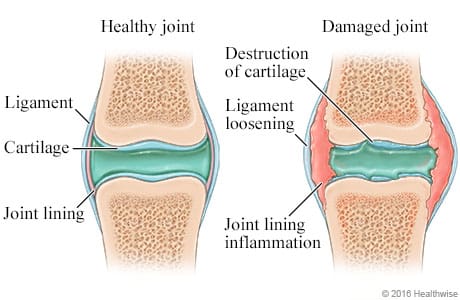
Articular cartilage is the smooth, shock-absorbing surface that covers the ends of bones inside your joints.
It’s made primarily of:
- Type II collagen
- Proteoglycans
- Water
- Specialized cells called chondrocytes
Unlike muscle, cartilage does not have a direct blood supply.
That’s where the confusion starts.
No blood vessels doesn’t mean no healing.
It means healing works differently.
Cartilage relies on mechanical circulation — not vascular circulation.
And that distinction changes everything.
Movement Is the Pump
Every time you bend and straighten a joint:
- Compression pushes fluid out
- Decompression pulls fresh fluid back in
That fluid is called synovial fluid.
It delivers nutrients.
It removes waste.
It lubricates the joint surface.
Without movement, this exchange slows down.
Waste accumulates.
Nutrient delivery drops.
Chondrocytes become metabolically suppressed.
This is why prolonged rest often makes joints feel stiffer, not better.
Cartilage depends on cyclic loading.
Motion is the irrigation system of the joint.
Cartilage Responds to Mechanical Signals
Your body is not passive.
Cells respond to force.
When cartilage experiences moderate, controlled load, chondrocytes convert that mechanical stress into biological signals. This process is called mechanotransduction.
Appropriate loading:
- Stimulates collagen production
- Maintains matrix integrity
- Preserves joint thickness
Too little load weakens tissue.
Too much load degrades tissue.
But rhythmic, intelligent loading?
That’s a repair signal.
Cartilage doesn’t respond best to intensity.
It responds best to consistency.
Inflammation Can Suppress Healing
Cartilage repair is highly sensitive to systemic inflammation.
Inflammatory cytokines — chemical messengers released during chronic metabolic stress — can:
- Increase cartilage breakdown enzymes
- Suppress collagen synthesis
- Degrade synovial fluid quality
This is why joint health is not just a “joint problem.”
It’s a metabolic environment problem.
If someone is:
- Chronically sleep deprived
- Over-consuming ultra-processed foods
- Carrying excess visceral fat
- Experiencing blood sugar volatility
They are creating a biochemical environment that suppresses tissue repair.
You cannot separate joint health from whole-body health.
Synovial Fluid Quality Matters
Synovial fluid isn’t just lubrication.
It is:
- A nutrient delivery system
- A shock absorber
- A metabolic exchange medium
For it to function properly, it must be:
- Well hydrated
- Low in inflammatory degradation
- Circulated daily
Sedentary behavior stagnates it.
Chronic inflammation degrades it.
Consistent movement restores it.
Joint health is dynamic — not static.
Repair Requires Raw Materials
Cartilage is built from structural proteins and specialized matrix components.
That means repair requires:
- Adequate total protein
- Essential amino acids
- Micronutrients that support collagen formation
- Healthy digestion and absorption
If someone is under-eating, chronically dieting, or metabolically compromised, repair capacity drops.
Tissue rebuilding is an active process.
It requires both signal and supply.
Time and Repetition Drive Adaptation
Cartilage turnover is slow.
Structural remodeling does not happen in weeks.
It happens over months.
This is where most people quit too early.
They load inconsistently.
They stop once pain improves.
They return to inflammatory habits.
But biology responds to repeated signals.
Daily movement.
Sustainable nutrition.
Reduced inflammation.
Adequate building blocks.
Compound interest applies to joints too.
The Fitness Index Perspective
Rebuilding cartilage is not about a miracle supplement.
It’s not about a single exercise.
It’s about restoring the biological environment that allows repair.
Cartilage responds to:
- Cyclic daily loading
- Proper mechanical signaling
- Low systemic inflammation
- Healthy synovial fluid
- Adequate nutrients
- Time and consistency
This is a systems approach.
And systems thinking is what modern joint health conversations are missing.
The Final Word
The body is designed to adapt.
But adaptation requires the right inputs.
If you move daily.
If you control inflammation.
If you nourish the tissue.
If you remain consistent.
You dramatically improve the conditions for repair.
Cartilage is not “dead.”
It’s responsive.
The question is whether you’re giving it something worth responding to.
Ready to Go Deeper?
Understanding that cartilage can heal is the first step.
Knowing how to structure that healing is the next.
Inside the members section, I walk through:
- The precise mechanical loading approach
- How to regulate inflammation without guesswork
- Nutritional building blocks for matrix repair
- Realistic timelines and expectations
If you want the complete system, it’s there.