Saponins tend to show up in nutrition conversations as a warning.
They’re described as harsh.
Disruptive.
Damaging to the gut lining.
And like most things that earn that reputation, the problem isn’t what saponins do — it’s how narrowly they’re being looked at.
To understand saponins, you have to stop asking whether they are “good” or “bad” and start asking a better question:
What kind of system are they meant to interact with?
Saponins are glycoside compounds found in many familiar plant foods — legumes, quinoa, oats, alfalfa, and a number of roots and herbs. Their name comes from sapo, the Latin word for soap, because they foam when mixed with water.
That foaming tells you something important.
Saponins interact with cell membranes.
In plants, this is a defense strategy. Saponins discourage insects, inhibit fungi, and prevent overconsumption by interfering with the membranes of organisms that would harm the plant.
That same membrane interaction is what makes people uneasy when saponins show up in human nutrition.
Most of the fear around saponins comes from studying them out of context.
If you isolate saponins, concentrate them, and expose them to already inflamed tissue, they can feel irritating. That’s especially true when the gut lining is compromised, protective mucus layers are thin, fiber intake is low, and food is eaten raw or poorly prepared.
In those situations, the interaction feels aggressive — and the conclusion becomes simple:
“Saponins damage the gut.”
But that conclusion only makes sense if you ignore the system they’re acting within.
In a healthy gut, saponins behave very differently.
Their defining feature — membrane interaction — becomes selective rather than indiscriminate.
Pathogens such as parasites, fungi, and harmful bacteria depend heavily on exposed, fragile membranes to survive. They lack the layered protection, regenerative capacity, and microbial buffering that human intestinal cells have.
Human gut cells, by contrast, are protected by mucus layers, supported by microbiome metabolites, and constantly renewed.
So when saponins apply pressure, they don’t level the playing field.
They tilt it.
Pathogens are weakened first.
This helps explain why saponins consistently show anti-parasitic and anti-fungal activity in the literature. They destabilize membranes, disrupt ion balance, and increase cellular leakage in organisms that are already vulnerable.
They don’t sterilize the gut.
They apply selective pressure.
And when that pressure is paired with fiber, hydration, and normal digestive transit, it creates an environment parasites don’t thrive in.
Saponins also interact with cholesterol in the digestive tract, which is where another misunderstanding tends to arise.
Because they bind cholesterol, saponins reduce cholesterol absorption and increase bile acid excretion. Over time, this gently lowers circulating LDL.
This isn’t depletion.
It’s regulation.
That distinction matters, because it helps explain why legume-rich diets are so consistently associated with improved lipid profiles, lower cardiovascular risk, and longer lifespan.
Once again, the effect is not extreme — it’s moderating.
There’s also an immune dimension that often gets overlooked.
Saponins interact with gut-associated lymphoid tissue — the immune interface embedded throughout the digestive tract. This exposure improves immune surveillance, sharpens antigen recognition, and reduces inappropriate immune reactions over time.
In other words, saponins don’t provoke the immune system.
They train it.
An immune system that never encounters challenge becomes reactive. An immune system exposed to mild, controlled inputs learns restraint.
When saponins cause discomfort, it’s rarely because they’re inherently harmful.
Sensitivity almost always reflects an underlying loss of resilience — inflamed tissue, poor microbial diversity, ultra-processed diets, or inadequate preparation.
In those cases, removing saponins can reduce symptoms temporarily. But it also removes immune training, microbial balance, and parasitic pressure.
Relief comes from repair, not permanent avoidance.
Traditional cultures understood this intuitively.
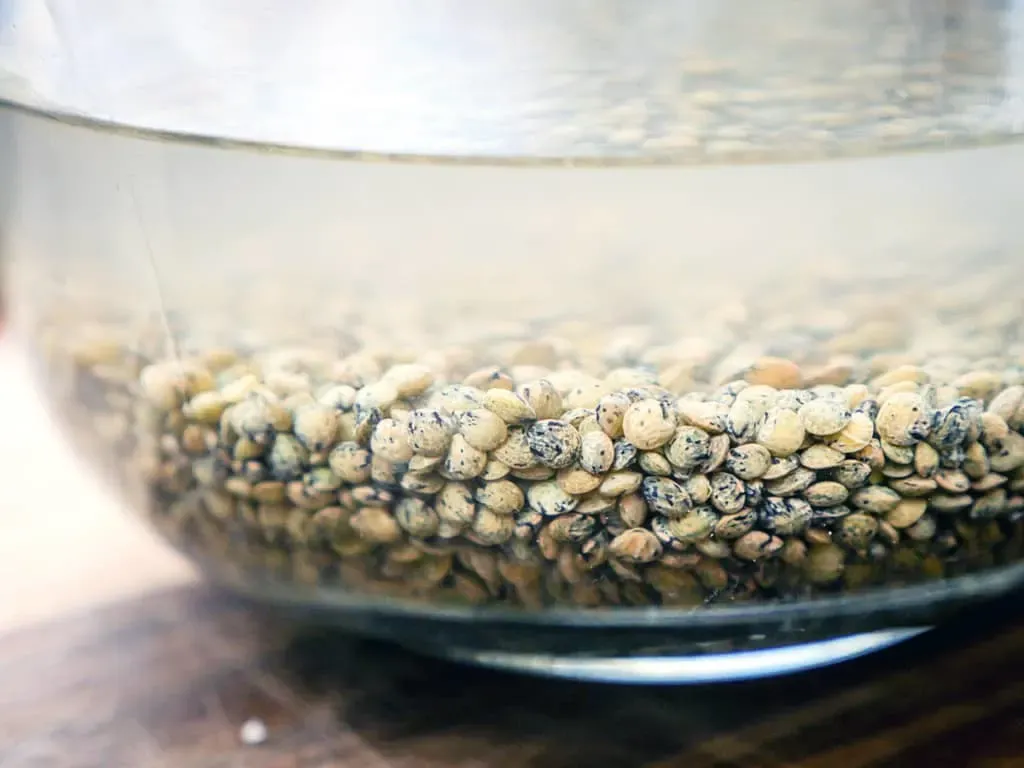
Saponin-rich foods were soaked, rinsed, cooked, and fermented. Surface saponins were reduced, bitterness was removed, and harsh fractions were softened — while the regulatory effects were preserved.
Preparation wasn’t about neutralizing a toxin.
It was about shaping the interaction.
Taken in context, saponins fit a familiar pattern.
They don’t destroy healthy systems.
They expose fragile ones.
They don’t coddle the gut.
They prepare it.
And they reward bodies that are nourished, diverse, and well-prepared with resilience instead of reactivity.
Real food isn’t gentle in the way modern nutrition often promises.
It’s gentle in a deeper way — by training the body to endure.