A practical nutrition framework built for daily movement, real food, and long-term metabolic health.
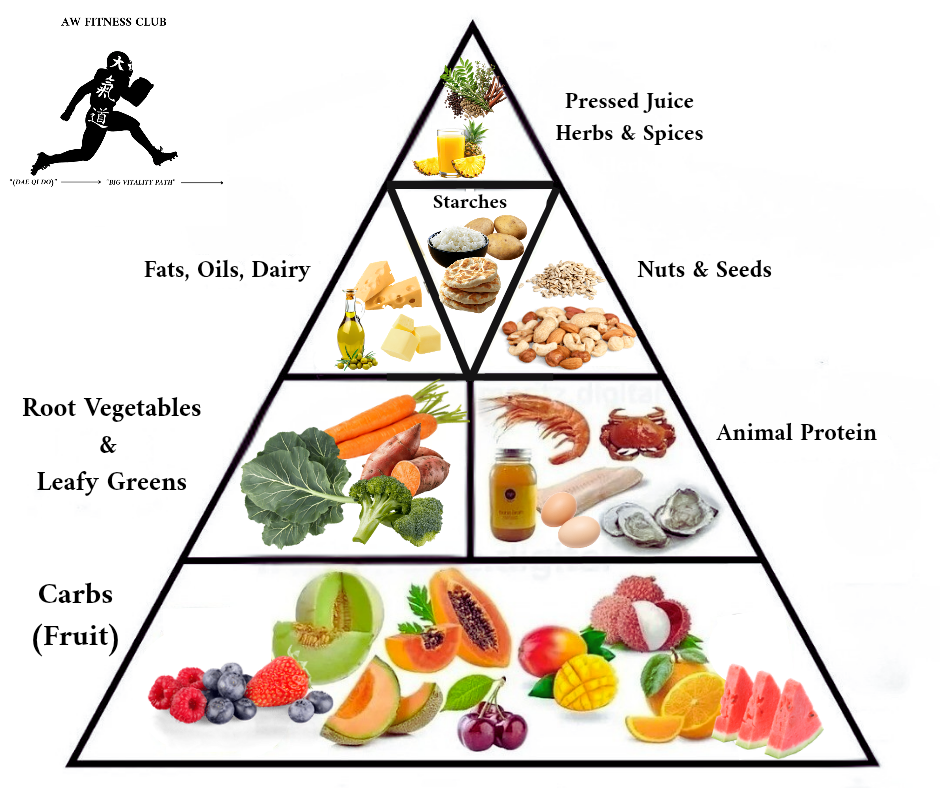
The 7-Step Diet is how we turn the Real Food Pyramid into daily action. Instead of counting calories or micromanaging macros, this system teaches you how to prioritize food based on how the human body actually produces energy, regulates blood sugar, and maintains long-term metabolic health.
Most people don’t struggle with nutrition because they lack discipline. They struggle because they’ve been given systems that work against their biology. Calorie counting, crash diets, rigid eliminations, and fear-based food rules create stress before they create results. Digestion slows. Hormones stay elevated. Consistency eventually breaks.
The 7-Step Diet was built to solve that problem.
It is not a restriction plan or a numbers game. It’s a nutritional support framework designed to work alongside daily movement, adaptive training, and real life. Training is what drives change in the body. Nutrition’s role is to protect that change — by supporting hydration, elimination, hormonal balance, and simplicity.
When food works with the body instead of against it, fat loss becomes sustainable, energy stabilizes, and health improves without obsession.
Step 1: Timing Your Meals
Restore Metabolic Rhythm
We’ve been misled for years by marketing into believing breakfast is “the most important meal of the day.” In reality, what the body needs most in the morning is hydration and gentle metabolic activation, not a heavy load of starch, refined carbohydrates, and processed food.
Large early meals keep insulin elevated when the body should be transitioning out of rest. On the opposite end of the day, late eating interferes with melatonin, growth hormone, and overnight recovery.
Allowing the digestive system a meaningful period of rest each day is essential for weight management and metabolic health.
This eating rhythm is often called intermittent fasting or time-restricted eating.
Practical guidance
- Begin the day with water (lemon or lime if possible)
- Black coffee or tea is optional
- Break the fast gently, often with whole fruit
- Aim for no more than 1–2 substantial meals per day
- Avoid eating late at night when possible
Restricting food intake for roughly 12–16 hours allows insulin to fall, glycogen to deplete, and fat to be mobilized — without rigidity or extremes.
Step 2: Smart Snacking
Reduce Insulin Noise
Snacking itself isn’t the issue.
Processed snacking is.
Soda, chips, cookies, candy, “sugar-free” snacks, and microwave meals are loaded with refined sugars, poor-quality oils, and chemical preservatives that inflame the gut and keep insulin chronically elevated — even in a calorie deficit.
That environment blocks fat loss.
Smart snacking keeps metabolism calm.
Better snack choices
- Fresh fruit (always a win)
- Nuts in proper portions
- Dried fruit without added sugar
- Trail mix you enjoy
- Dark chocolate in moderation
- Greek yogurt or cheese if you tolerate dairy
A simple plate guideline:
- Fruits and vegetables ≈ 50%
- Protein ≈ 30%
- The remainder from whole-food fats/starches
This is not macro counting — it’s context creation.
Step 3: Cut the Bread, Keep the Carbs
Improve Carb Quality
Bread is one of the most over-consumed foods in the Standard American Diet. Most modern breads are heavily refined, stripped of nutrients, and often contaminated with pesticides such as glyphosate — contributing to low-grade inflammation and gut dysfunction.
Refined bread acts like sugar in the bloodstream. Without fiber to slow absorption, insulin spikes, fat burning shuts down, and excess glucose is converted to stored fat.
Carbohydrates are not the enemy.
Refined delivery systems are.
Better carbohydrate options
- Rice
- Potatoes
- Yams
- Green plantains
- Beans and lentils
- Other tubers and starchy vegetables
Always balance starch with vegetables.
Aim for ⅓ to ½ of the plate from vegetables.
Potatoes do not count as vegetables.
Step 4: Fruit & Vegetable Diversity
Improve Blood Quality and Cardiovascular Health
Fruits and vegetables are not just “healthy foods” — they are nutritional signals.
They are low in calories, high in fiber, rich in micronutrients, and packed with phytonutrients that:
- slow sugar absorption
- stabilize insulin
- reduce inflammation
- support gut health
- improve blood chemistry
Green leafy vegetables are especially important. Non-heme iron, abundant in leafy greens, plays a critical role in oxygen transport and cardiovascular efficiency.
Make plants non-negotiable
- Keep leafy greens available at all times
- Add vegetables to every meal
- Rotate fruits regularly
- Eat a wide variety of colors and types
The quality of your blood — and your long-term health — closely reflects your plant intake.
Step 5: The Principle of Discriminant Consumption
Eat in Alignment With Ancestry, Geography, and Informed Choice
The modern American food system prioritizes profit over health, often acting as a feeder system for the medical and pharmaceutical industries. This is tragic, because food is one of life’s great pleasures and a cornerstone of healing.
There is no single ideal diet for everyone.
An optimal diet varies by:
- ethnic background
- geographical location
- season
- local biodiversity
Your DNA did not evolve in isolation. Cultures developed nutritional traditions based on the foods that sustained them for generations.
Eat foods native to your ethnic background.
Eat foods grown where you live.
Local produce is fresher, less reliant on artificial ripening agents, and often carries a lower toxic burden — much like how local honey can reduce allergy symptoms.
I am Jamaican by descent. A food like garlic cured in honey is a widely known staple in my culture relied on for immune support and resilience. Every culture has its own equivalents.
Discriminant consumption also means choosing your poisons consciously.
You will never eliminate every toxin.
The goal is informed choice.
Learn the risks. Decide what you will avoid. Decide what you will tolerate. Exercise choice with awareness instead of ignorance.
This step restores sovereignty over food.
Step 6: Establish Dietary Staples
Create Consistency Without Counting Calories
This may be the most important step.
Once you establish dietary staples, everything becomes easier. By committing to a small set of whole foods eaten daily and weekly in predictable amounts, you account for most of your nutrition without tracking calories.
This is why calorie counting becomes unnecessary.
Ask yourself
- What 3–4 whole foods do I eat daily or weekly?
- Are they serving my health?
- If not, what will replace them?
Examples:
- Mixed vegetables at every dinner
- Fruit or chickpea salad to break the fast
- Weekly staples like plantains, rice, or lentils
Meal preparation makes this automatic. Over time, repetition lowers stress, improves digestion, and builds confidence.
This is how you “put calories in the bank” without counting them.
Step 7: Hydrate, Hydrate, Hydrate
Support Circulation, Detoxification, and Hormonal Balance
Your body is roughly 80% water.
Your blood is water.
Your circulation depends on it.
Hydration should be the top nutritional priority.
Begin the day with water, ideally with lemon or lime. Lemon water acts as a liver tonic, and the liver plays a central role in detoxification, glucose storage, and energy regulation.
Dehydration creates acidity. To neutralize acids, the body leaches minerals from tissues (namely bones), disrupting hormones and weakening immunity.
Hydration also comes from food.
Water in fruit is often more hydrating than plain water because it is balanced with minerals and readily absorbed by cells. Bread and ultra-processed foods are dehydrating.
Hydrate aggressively — through water and water-rich foods.
The Final Word
The 7-Step Diet isn’t about control — it’s about cooperation.
When training is consistent, movement is daily, and food supports hydration, elimination, and hormonal balance, the body does what it was designed to do. Energy becomes predictable. Digestion stabilizes. Fat loss stops requiring force.
These seven steps work together as a system. You don’t need to execute them perfectly. You just need to move in the right direction, consistently.
This is how busy parents eat to stay lean, strong, and resilient — without turning food into a full-time job.
For members addressing deeper gut, lymphatic, or metabolic dysfunction, each step expands into more advanced strategies inside the Inner Circle.