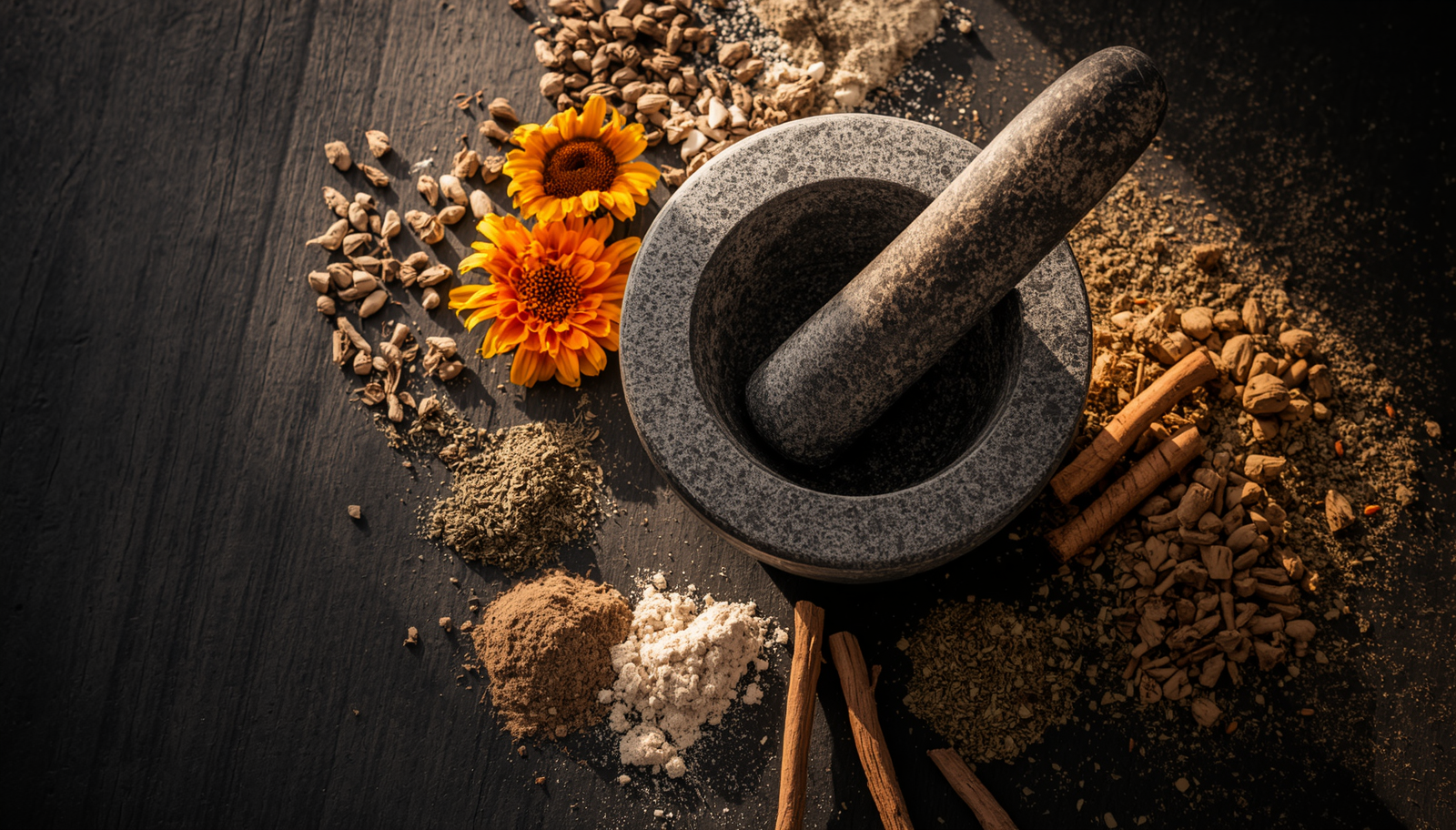
The 90-Day Gut Rebuild Protocol
/ Andre Williams

The 90-Day Gut Rebuild Protocol

Herbs, foods, and the order your gut actually needs them in


A client came to me recently with six years of stomach trouble.

SIBO, confirmed by testing. Small intestinal bacterial overgrowth — not the kind you can out-willpower.

A second finding surfaced during the workup: a congenital enzyme deficiency his body had never quite overcome. He'd spent 49 years not knowing why certain foods wrecked him.

His safe-food list had narrowed to pizza. Not because pizza was good for him — he knew it wasn't — but because pizza didn't flare him. Every other familiar meal — salad, pasta & red sauce — sent him back to the bathroom or kept him up at night.

He'd worked with doctors. He'd tried rounds of things. He'd joined the support groups. And eventually his most recent doctor sat him down and said what the system believes to be true:

"At this point, it may be better to focus on managing it than curing it."

He told me that sentence felt like a punch in the face.

And then he made the decision most people don't make. He decided he didn't want to become himself again. He wanted to become someone healthier than the version he'd been before any of this started.

This is the protocol we're building together over the next 90 days.


It's also the protocol I give every client whose gut has become the limiting factor in their training. If that's you — or if you know a stomach story that sounds anything like the one above — this article is the blueprint.

The Core Principle

Herbs don't heal a gut.

The body heals the gut.

Herbs remove friction and feed the body the inputs it's been missing.

Hold this frame through every section that follows. There is no herb that fixes you. There is a body that repairs itself when you stop destroying it and start feeding it what it needs. The herbs and supplements in this protocol are the most potent natural levers we have for that repair. None of them work alone. Together, sequenced correctly, they change the terrain.

Where This Article Sits

This protocol is the third layer in a three-article set:

  • The 6 Major Gut Destroyers — the why. What's breaking the gut in the first place.
  • The 7 Most Powerful Tools to Repair the Gut Lining — the what. The foundational rebuild toolkit: bone broth, aloe vera, L-glutamine, zinc, omega-3s, slippery elm and marshmallow root, and low-fruit high-fiber smoothies.
  • This article — the when and how much. The sequenced protocol on top of the foundation, with the specific herbs, doses, preparation methods, and sourcing that turn the toolkit into a plan.

If you haven't read the first two, read them first. And if the foundational tools — especially zinc (which powers stomach acid) and omega-3 EPA/DHA (which calms membrane-level inflammation) — aren't already in your daily rhythm, start there. A rebuild without those is fighting itself from the jump. They're prerequisites, not additions.

This article picks up with the assumption that those tools are already in motion, and gives you the herbal and dietary layer that takes the rebuild the rest of the way home.

The Sequence Matters More Than the Ingredients

Most people who try herbal gut protocols make the same mistake. They stack everything Day 1. Ten supplements, fifteen teas, a fermented food at every meal. Within two weeks the gut is more inflamed than when they started, and they conclude "herbs don't work for me."

Herbs work. Stacking doesn't.

The gut repairs in a specific order:

  1. Stop the damage — remove the inputs that erode the system
  2. Seal the lining — mucosal herbs that coat and soothe
  3. Rebuild the microbiome — fermented foods and prebiotic fibers, carefully
  4. Support the systems behind the gut — liver, nervous system, circulation
  5. Integrate and maintain — return to a full, varied diet at capacity

Skip step one, nothing else sticks. Jump to step three with a raw lining, you make it worse.

The 90 days below follow that order.


Phase 1 — Days 1 to 30: Stop the Damage + Seal the Lining

The first month is the least glamorous and the most important. Most of the work is subtraction, not addition.

The subtraction list (do this on Day 1)

Remove these from daily intake for the full 90 days:

  • Ultra-processed foods — anything with a long ingredient list of things that aren't food
  • Industrial seed oils — especially in restaurant and takeout form
  • Alcohol — even moderate intake
  • Artificial sweeteners — sucralose, aspartame, saccharin, ACE-K
  • Refined wheat flour — commercial bread, most pizza, most pasta
  • Added sucrose as the majority of your sugar intake

This part isn't optional. Every herb in the protocol will underperform if the destroyers are still running in the background.

The Phase 1 mucosal team

These four herbs coat, soothe, and seal a raw gut lining. Introduce them one at a time, a week apart. Listen to your body. Keep what works. Drop what doesn't.

Two of them — slippery elm and marshmallow root — are already in the 7 Tools foundational article. Here you'll find the preparation and dosing specifics.

1. Slippery Elm Bark

What it does: Forms a protective coating over the entire gut lining. Mucilaginous — meaning it becomes a gel when hydrated. That gel is what lines and soothes.

How to prepare: Powder is the most versatile form. Mix 1 teaspoon in a mug of warm water, stir until it thickens into a thin gruel. Drink 20 minutes before meals. Also available as lozenges and in pre-blended teas.

Where to get it: Mountain Rose Herbs (bulk powder), Starwest Botanicals, or a local health food store. Traditional Medicinals makes a tea blend that includes it.

How to administer: 1 teaspoon of powder, 2–3 times per day, 20 minutes before meals. For 30 days minimum.

Caution: Take it at least 2 hours apart from any prescription medication — its coating action can slow absorption.

2. Marshmallow Root

What it does: Same family of mucilaginous action as slippery elm. Coats and protects. Particularly good for the upper GI — throat, esophagus, stomach.

How to prepare: Cold infusion is the traditional method and the most potent. 1 tablespoon of dried root in a jar with 2 cups of cool water overnight. Strain in the morning.

Where to get it: Same sources as slippery elm. Pukka sells a licorice-and-marshmallow tea that's excellent.

How to administer: 1 cup of cold infusion, 2x per day. Can be taken alongside slippery elm.

3. Licorice Root (DGL Form)

What it does: Heals the gastric lining. Supports ulcer repair. Helps seal the tight junctions in the gut wall that become porous under inflammation.

How to prepare: DGL — deglycyrrhizinated licorice — is the form you want. It's licorice with the glycyrrhizin compound removed, the one that can raise blood pressure. DGL keeps the healing action without the cardiovascular risk. Chewable tablets are the most bioavailable form.

Where to get it: Solaray, Enzymatic Therapy, and Natural Factors all make reliable DGL tablets. Most health food stores carry them.

How to administer: 1–2 chewable tablets, 20 minutes before each meal, for 30 days.

Caution: If you use regular (non-DGL) licorice root tea, don't drink it daily long-term. It can raise blood pressure and deplete potassium. DGL tablets are the safe version for daily use.

4. Aloe Vera Inner Leaf

What it does: Anti-inflammatory across the gut lining. Helps seal leaky gut. Accelerates repair of damaged intestinal cells.

How to prepare: Inner leaf only. Not whole leaf. Whole-leaf aloe contains aloin, a compound in the plant's latex that acts as a harsh laxative and irritates the gut. Inner-leaf juice is clear or pale, with the aloin removed.

Where to get it: George's "Always Active" aloe (tasteless, inner-leaf) is widely available. Lily of the Desert's "Inner Fillet" juice is another reliable option. Most health food stores stock both.

How to administer: 2 ounces (about 1/4 cup), 1–2 times per day on an empty stomach, for 30 days.

Caution: If you're on blood thinners, check with your doctor before starting.

The Phase 1 daily tea

Build one tea. Drink it twice a day — morning and mid-afternoon.

  • Chamomile (2 parts) — nervous-system support, mild anti-inflammatory, gentle on everything
  • Marshmallow root (1 part) — mucosal layer
  • Fennel seed (1 part) — reduces bloating, supports digestion
  • Optional: a pinch of fresh ginger root — if you tolerate ginger, it adds a motility assist

Loose leaf in a teapot. 10 minutes steep. Raw local honey if needed.

Food during Phase 1

Keep it simple. Phase 1 is not about optimal nutrition — it's about not giving the gut anything else to react to.

Eat freely:

  • Real bone broth — slow-simmered 18+ hours. This isn't a garnish — it's structure. Collagen, gelatin, glycine, proline, and glutamine precursors are the literal raw materials the gut uses to seal micro-tears and rebuild the barrier. One cup per day, minimum. Make it from scratch or use Kettle & Fire if you don't cook. This is the single most important food in Phase 1.
  • Cooked vegetables in familiar shapes: roasted broccoli, steamed green beans, cooked carrots, peppers, Brussels sprouts, asparagus, zucchini
  • Soft-cooked proteins — poached fish, braised chicken, ground meats in soups
  • Whole ripe fruit — bananas, pears, cooked apples (applesauce with no added sugar). Cooked fruit is easier than raw in Phase 1.
  • Low-acid beverages — herbal tea, water, broth

Skip for now. Add back in Phase 2:

  • Raw leafy greens, including salad
  • Raw cruciferous vegetables
  • Beans and legumes in large quantities
  • Nuts and seeds in large quantities
  • Fermented foods — wait until the lining is sealed before introducing microbial load

Phase 2 — Days 31 to 60: Rebuild the Microbiome + Support the Liver

The lining is sealed. Now we repopulate.

Add one fermented food per week

Small quantities. Start tiny. This isn't about chasing a serving count — this is about reintroducing microbial signals the gut has been missing.

  • Week 5: 1 tablespoon of real sauerkraut (fermented, not vinegar-pickled) with dinner, daily
  • Week 6: Add kimchi, 1 tablespoon per day
  • Week 7: Add plain kefir or yogurt with live cultures — 1/4 cup per day, if dairy is tolerated
  • Week 8: Add miso broth — dissolve 1 teaspoon of unpasteurized miso in warm (not boiling) water as a daily drink

If any one of these triggers bloating or discomfort, back off by half. If still uncomfortable, drop it and come back to it in two weeks.

Add the low-fruit, high-fiber smoothie

This one is pulled straight from the 7 Tools. When the microbiome is rebuilding, raw volume and aggressive fiber can backfire. The smoothie is the middle ground — soluble fiber that feeds beneficial bacteria without overwhelming a still-sensitive digestive system.

A basic Phase 2 template, once daily:

  • 1 cup unsweetened plant milk (oat, almond, coconut) or bone broth as the base
  • 1/2 frozen banana or 1/2 cup berries — keep fruit low, not the star of the show
  • 1 tablespoon ground flaxseed — soluble fiber, omega-3 support
  • 1 tablespoon chia seeds — soluble fiber, mineral support
  • 1 handful of steamed-then-cooled spinach or kale (cooking pre-softens the fiber)
  • Optional: 1 scoop of a clean collagen peptide (Vital Proteins, Great Lakes) for additional tissue support

Blend. Sip slowly. Start with a half-portion for the first week and scale up as tolerated.

A note on probiotic capsules

You may notice probiotic supplements are intentionally absent from this protocol.

In SIBO cases, the wrong bacterial strain in capsule form can make symptoms worse before they get better. Fermented foods deliver broader microbial diversity in lower, more forgiving doses. If capsule probiotics are going to enter your plan, they come in Phase 3 — with practitioner guidance and strain selection matched to your specific gut picture.

Introduce liver support

The gut doesn't work in isolation. Bile flow from the liver is what emulsifies fats, signals motility, and helps maintain microbial balance in the upper small intestine. After 30 days of gut work, the liver is often the next bottleneck.

5. Milk Thistle

What it does: Regenerates liver cells. Supports the liver's detoxification pathways. Protects liver tissue from inflammatory damage.

How to prepare: Capsules are the standard. The active compound (silymarin) isn't very water-soluble, so teas underperform capsules for this one.

Where to get it: Gaia Herbs and Herb Pharm make reliable versions. Look for standardized silymarin content on the label — 70 to 80% silymarin is the clinical range.

How to administer: 150 mg of standardized silymarin, 2x per day with meals, for 30–60 days.

6. Dandelion Root

What it does: Increases bile flow. Gently stimulates liver function. Supports elimination.

How to prepare: Roasted dandelion root tea is the most accessible form and tastes pleasantly earthy — close to coffee. Traditional Medicinals sells a roasted dandelion root tea that's a solid starting point. For loose bulk root, Mountain Rose Herbs.

Where to get it: Most grocery stores carry the tea. Bulk loose root from Mountain Rose or Starwest.

How to administer: 1 cup of tea before your largest meal of the day. Daily.

Caution: If you have gallstones or a bile duct obstruction, skip this one. Check with your doctor if unsure.

Calendula — the quiet addition

7. Calendula

What it does: Anti-inflammatory across the intestinal lining. Supports tissue repair. Gentle enough to pair with anything in this protocol.

How to prepare: Dried flowers in tea form. Add 1 teaspoon to the Phase 1 tea blend.

Where to get it: Bulk dried flowers from Mountain Rose Herbs or Starwest.

How to administer: Add to the daily tea blend. No separate dosing needed.


Phase 3 — Days 61 to 90: Integrate + Maintain

The gut is sealed. The microbiome is rebuilding. The liver is flowing. Now we expand capacity and build the permanent eating rhythm.

The food expansion

  • Week 9: Reintroduce raw vegetables in small quantities. Start with one side-sized salad at lunch — olive oil, lemon, salt. See how it lands.
  • Week 10: If tolerated, expand to larger raw salads. Add soaked nuts and seeds back in.
  • Week 11: Add beans and legumes back, starting with well-cooked small amounts. Lentils are the easiest re-entry. Soak overnight, cook thoroughly.
  • Week 12: Whole foods at full volume. Fermented foods daily. Smoothie daily. Tea blend daily. Herbs transitioning to maintenance dosing.

L-Glutamine (for SIBO cases only — most readers start earlier)

L-glutamine is named in the 7 Tools as a foundational rebuild fuel. For most readers, it belongs in Phase 1 — it's the primary fuel source for intestinal cells and accelerates tight-junction repair from day one.

For SIBO cases specifically — including clients who fit the profile in this article's opening — L-glutamine gets held back to Phase 3. Some practitioners have raised concerns that glutamine can feed certain bacteria in an active overgrowth. The conservative move with SIBO is to wait until the mucosal seal and microbial rebuild have stabilized, then introduce.

How to prepare: Powder form, tasteless, dissolves in water.

Where to get it: NOW Foods, Thorne, and Pure Encapsulations all make clean versions.

How to administer: 5 grams (about 1 teaspoon) in water, 2x per day between meals, for 30 days starting in Phase 3.

A word on Triphala

Triphala is a classic Ayurvedic formula — three fruits, potent colon tonic, excellent for general digestive health. You'll see it on most gut-protocol lists.

Not in this protocol. Not yet.

For active SIBO, triphala's fiber content and bulking action can feed the overgrowth before the microbiome is rebalanced. It's a Phase 3-or-later consideration, and only after checking in with your coach.

For non-SIBO gut cases, triphala can enter in Phase 2 safely. But the stubborn gut cases this protocol is written for usually have SIBO as a factor — so it's off the default map.


A Note on Real Food vs. Supplements

Every herb, powder, and capsule in this protocol is a tool — not a replacement for food.

The steady position of the AW Fitness approach is that whole food beats supplementation when both are available. If you can get glutamine from bone broth and meat, do that first. If you can get zinc from pumpkin seeds, oysters, and grass-fed beef, do that first. If you can get omega-3s from wild salmon, sardines, and flax, do that first. The herbs and capsules are for conditions that require more targeted repair support than a weekly meal plan can deliver on its own.

The rule of thumb: food is the foundation. Herbs are the precision tool. Capsules are the backup.

Every herb in this protocol can eventually be replaced — or at minimum supplemented — with a whole-food parallel once the gut is repaired and capacity has returned. The protocol is the bridge. The diet is the destination.


Where to Source Your Herbs

One consolidated list so you don't have to hunt:

  • Traditional Medicinals — grocery store teas (chamomile, marshmallow, dandelion). Reliable, affordable, widely available.
  • Pukka — higher-end herbal teas, pre-blended formulas. Whole Foods carries most of their line.
  • Mountain Rose Herbs (mountainroseherbs.com) — bulk dried herbs and powders. Best source for slippery elm powder, marshmallow root, calendula flowers, dandelion root.
  • Starwest Botanicals — similar to Mountain Rose. Occasionally better pricing on certain herbs.
  • Gaia Herbs — high-quality capsule and liquid extracts. Milk thistle, DGL, others.
  • Herb Pharm — liquid herbal extracts. Potent, traditional, clean sourcing.
  • Local health food stores — Whole Foods, Sprouts, independent co-ops. Ask the supplement staff about quality brands in your area.

Avoid Amazon for consumable herbs when possible. The counterfeit rate on third-party supplement listings is high and quality verification is difficult.


Pattern People Miss

The most common failure in gut rebuild protocols isn't the choice of herbs. It's the sequence.

People stack everything Day 1. They add probiotics before the lining is sealed. They push triphala while SIBO is active. They reintroduce raw salads in Week 1 because "vegetables are healthy." Each of those moves is technically correct in isolation. Each of them derails the rebuild.

The body is not a checklist. It's a system. And systems respond to order, not to intensity.

A smaller, sequenced protocol run correctly will heal faster than a larger, aggressive protocol run wrong.

Run this one as written. Adjust with your coach. Don't add layers from Instagram in Week 1 because someone said reishi changed their life.


The Final Word

  • Gut healing is architecture, not a cleanse
  • The sequence is: stop the damage → seal the lining → rebuild the microbiome → support the systems behind the gut → integrate
  • The 7 Tools article gives you the foundational rebuild toolkit — bone broth, aloe, L-glutamine, zinc, omega-3s, slippery elm and marshmallow root, and the low-fruit smoothie. This protocol gives you the herbal layer and the sequence on top.
  • Herbs work when they're sequenced. They don't work when they're stacked.
  • The 90-day protocol has three phases — not because 90 days is a magic number, but because each phase needs about 30 days to land before the next layer enters
  • For stubborn cases — SIBO, enzyme deficiencies, decade-long symptoms — the discipline of the sequence is what makes the rebuild stick
If you've been managing a gut for years and it hasn't healed, you don't need more management.

You need a rebuild.

This protocol is the rebuild.

Inner Circle truth:

The sequence is the system. Skip the order, skip the healing. The herbs are waiting for you to stop stacking and start listening.

Related Articles:


A note on scope: this article is educational. Herbs are powerful, and what heals one gut can irritate another. If you're on medication, pregnant, managing a chronic condition, or dealing with symptoms that aren't improving — work with a practitioner. The protocol above is a framework, not a prescription. Your coach will help you adapt it to your specific case.

Andre Williams

Andre Williams

I help busy parents get fit in 90 days without counting calories or lifting weights. Servant of Christ. NFL Veteran. Athletic Fitness Coach. Speaker & Author of "After the Last Snap: When the Game Ends, Life Begins"