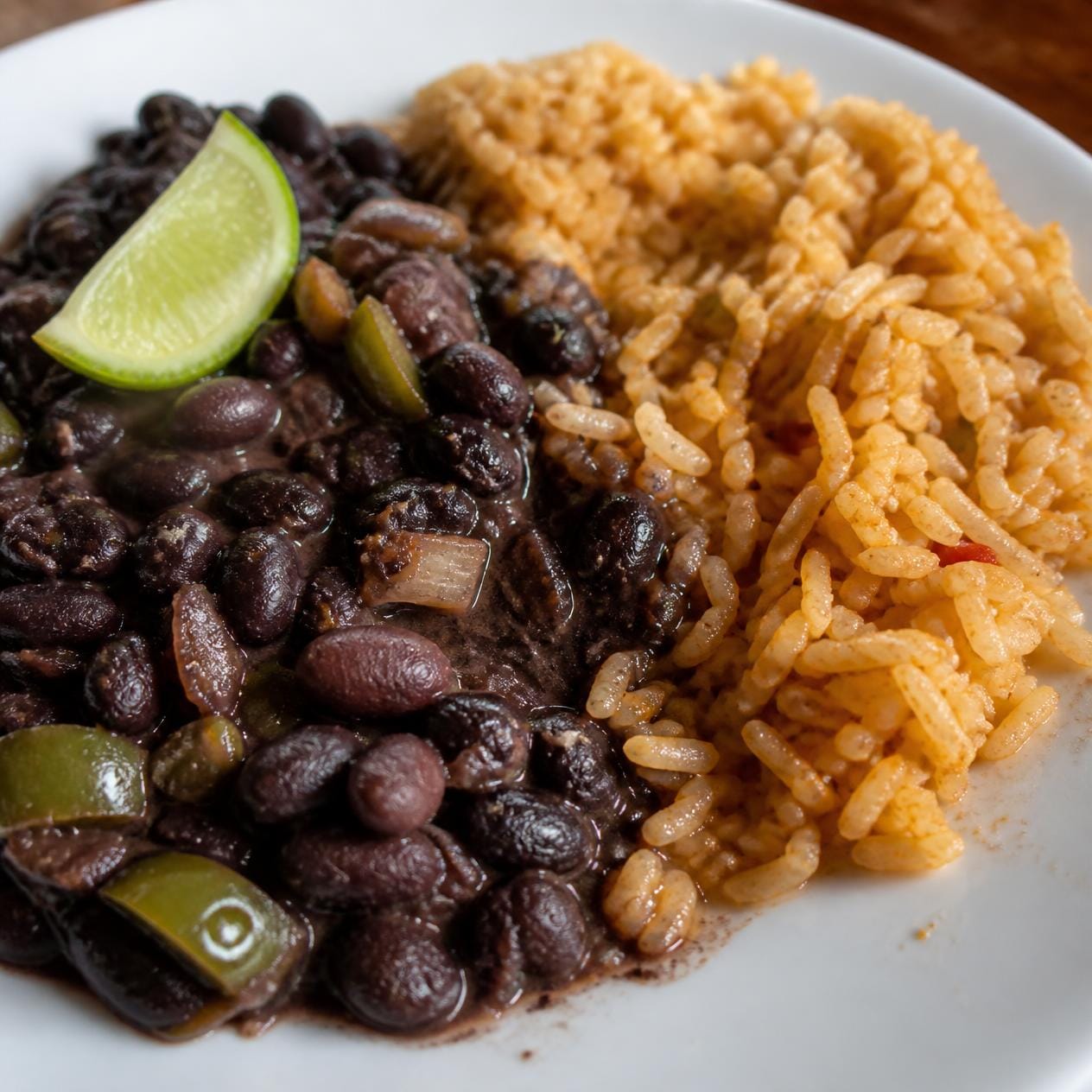
Every week people send me photos of their plates.
Most of them are doing better than they think. There’s spinach in the bowl, black beans underneath, something orange on the side that got roasted instead of fried. Whoever built that plate already did the hard part, which is choosing real food in a world set up to make that inconvenient.
Then I look at the glass sitting next to it. Iced tea, no sugar, which by every rule they have ever been given is the responsible choice. And that glass is quietly walking off with a good portion of the iron in those beans.
I don’t bring that up to take the win away. The plate is still a good plate. The person who made it is further along than they were six months ago. But it could be doing more for them, and the difference has nothing to do with buying different food.
You don’t have a food quality problem. You have a pairing problem.
We were taught to read food like a receipt
Spinach has iron, oranges have vitamin C, carrots have beta-carotene. Line them up, check the boxes, move on. That’s how almost everybody learned nutrition, and it’s not wrong exactly. It’s just incomplete in a way that costs you.
Your body doesn’t read a receipt. It runs chemistry. And chemistry only happens when things meet.
Inside every real food there are dozens of compounds, not one. Some of those compounds open doors for each other. Some of them stand in the doorway. What ends up in your blood is not what was on the label. It’s what survived the meeting.
In other words, your body can only use what it can actually absorb.
In other words, two people can eat the same bowl of beans and one of them walks away with a lot more iron than the other.
In other words, absorption is a relationship, and it gets decided at your table, not at the store.
What opens the door
The iron in beans, lentils, and greens is real iron, but it comes in a form your gut is reluctant to take. Vitamin C in the same meal changes that. Not a supplement, not later in the day, in the same meal. A squeeze of lime over the beans. Roasted peppers in the same bowl. Pico on top. That’s the whole intervention, and it does more than the same lime eaten three hours later.
The color in carrots, sweet potato, tomatoes, and dark greens is fat-soluble. No fat in the meal means a good portion of it rides straight through you. This is why a salad drowned in fat-free dressing gives you less than the same salad with olive oil and avocado on it. The fat isn’t the compromise. The fat is what lets the vegetables land.
Turmeric is the one people already half know. On its own it barely absorbs. Black pepper alongside it changes that a lot, and fat helps again. Which is exactly how curry has been cooked for a few thousand years, long before anyone isolated a compound and put it in a capsule.
None of this is new. It’s old, and we forgot it.
And what stands in it
The same logic runs the other direction, and this is where most people lose ground without knowing it.
Coffee, tea, and calcium all compete with iron for the same door. Milk in the cereal, tea with the lentils, coffee right on top of a big greens-and-beans lunch. Every one of those is a small tax on the meal.
That’s not a reason to fear any of them. It’s a reason to move them. Nobody has to give up coffee. Just stop drinking it on top of the meal where the iron is. Put an hour between them and the problem is gone.
This is also why I keep telling people to quit being scared of the salad. The compounds in plants that supposedly block minerals are real. They are also the same compounds doing the plant’s protective work, which is the whole argument in the Plant Regulatory Network piece. Those compounds aren’t there to hurt you. They’re there because the plant had its own problems to solve.
So pulling spinach off your plate to dodge the oxalate means handing back everything else the spinach was bringing, and you never had to make that trade. Cook the greens, put a fat with them, finish with citrus, and the minerals come through anyway. The fix happens in the pan, not in the grocery aisle.
Repair the terrain. Don’t fear the food.
You cannot count this
The part I like most about pairing is that there is no app for it.
Nothing on the back of a package tells you that the lime changed what the beans did. No tracker has a field for the olive oil that let the carrots count. You will never see a number that reflects whether your coffee sat an hour off your lunch or right on top of it.
The whole thing is structural. It lives in how the plate is built, not in what the plate adds up to.
Two plates can hold identical food and feed two people differently based only on what was sitting next to what. That is not something arithmetic can see. It’s something a cook can see.
It’s the same principle underneath the Gear Shift. Food doesn’t arrive in your body as a number, it arrives as a package, and the package decides how much your body actually takes and how fast.
What this actually looks like
You are probably already doing some of this by accident, because most traditional cooking figured it out long ago and built it into the recipe.
Beans and rice with lime and salsa. Greens cooked with a little fat and finished with vinegar. Fish with lemon. Tomatoes cooked in olive oil instead of eaten raw and dry. Curry with pepper and ghee. Every one of those is a pairing that somebody’s grandmother arrived at without a single citation.
The cultures that eat this way didn’t have absorption studies. They had generations of paying attention to what made people feel strong.
So when I grade a plate now, I’m not only counting what’s on it. I’m looking at whether the pieces can reach each other. A plate with four good foods that can’t talk to each other is doing less than a plate with three that can.
Tonight, squeeze half a lime over the black beans and move the iced tea an hour off the meal. Nothing else about the plate has to change.
Plates over numbers.