Three imperatives. Each one corrects a piece of nutrition advice that's been running in the wrong direction for decades. Together they describe how to eat carbohydrates and hydrate a body without falling for any of the formulas the food industry has spent forty years selling.
The standard nutrition conversation has carbs and bread as essentially the same thing. Cut the bread, you've cut the carbs. Add the bread back, you've added the carbs back. That conflation is doing damage to a lot of bodies, because it's leading people to believe that carbohydrates are the problem when the actual problem is the delivery system most carbs arrive in.
Fix the delivery system, the carbs work. Fix the hydration, the whole machine works better. That's the entire teach.
Keep the Carbs
The low-carb and keto cultures of the last decade got one thing right and one thing very wrong. They were right that the average person is overloaded on refined sugar and refined grain. They were wrong about the conclusion, which was that carbs themselves needed to come out.
Your body runs on carbohydrates. Your brain alone burns about 120 grams of glucose a day at rest. Your muscles store glucose as glycogen, which is what fuels every burst of effort, every sprint up the stairs, every set of pushups, every walk across town. Take carbs out of the diet entirely and the body will adapt — but the adaptation is a stress response, not a thriving one. You'll have less energy. Your training will be flatter. Your recovery will be slower. Your sleep will get worse before it gets better.
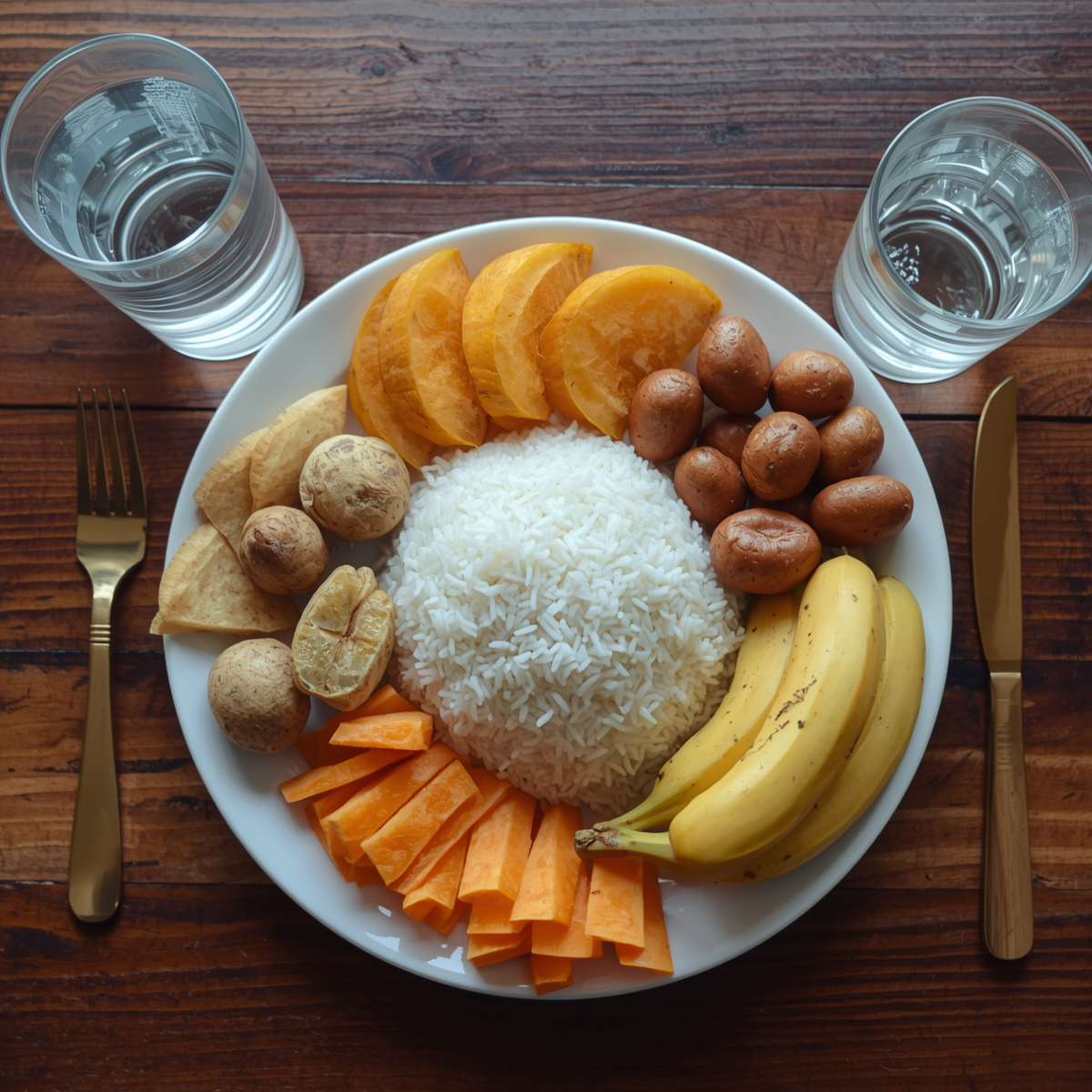
The carbs you actually need don't come in plastic bags or boxes. They come from the earth. Rice, potatoes, sweet potatoes, yams, plantains, beans, lentils, every fruit, every starchy vegetable. These are the carbs your body has eaten for ten thousand years and knows exactly what to do with. They come bundled with fiber, with water, with vitamins, with the slow-release structure that lets the body absorb them at a manageable pace.
This is what keep the carbs means. The fried green plantains, the Egyptian rice, the rice and beans, the apples and pears and kiwis. You don't subtract these from your plate. They are the foundation.
Cut the Bread
Bread is where most people are getting wrecked, and almost nobody is being told why.
Start with what bread actually is. A whole wheat berry — the seed of the wheat plant — has three parts. The bran is the outer husk, where most of the fiber and minerals live. The germ is the embryo of the seed, where the fats, the vitamins, the antioxidants, and the actual life of the grain are concentrated. The endosperm is the starchy interior — the part that exists to feed the seed if it sprouts. It's mostly carbohydrate with a small amount of protein. It's about a third of the berry by mass, and nutritionally, it's the least valuable third.
What commercial flour is, almost without exception, is the endosperm. The bran and germ are stripped out at the mill — partly because they shorten shelf life, partly because they make the flour darker and grittier, partly because the soft, fluffy loaves people have been trained to expect can only be made from refined endosperm. Two-thirds of the actual wheat is gone before the bag of flour is even on the shelf.
This is why commercial bread is "enriched." If you've ever wondered what that word on the package means, this is the answer. They strip the wheat down to the part that does the least for the human body, then add a few synthetic vitamins back in — usually iron, niacin, riboflavin, folate — so the final product can claim some kind of nutritional value. The enrichment label is the admission. You don't have to enrich something that was already whole.
So before any other issue, the bread on most shelves isn't really ground wheat. It's a third of ground wheat with a synthetic vitamin powder mixed in.
Now layer the next problem on top. Most commercial wheat in the United States is sprayed with glyphosate — the active ingredient in Roundup — at harvest. The spraying isn't to kill weeds. It's used as a desiccant, to dry the wheat down so the crop can be harvested faster and stored longer. The result is wheat that arrives at the mill already carrying chemical residue, which then gets ground into the flour that becomes the bread on your shelf.
This isn't a fringe claim. It's documented agricultural practice.
What glyphosate does in the human gut is also documented. It disrupts the microbiome — selectively killing off the beneficial bacteria your gut depends on for digestion, immunity, and inflammation control. It damages the intestinal lining, contributing to what's clinically known as increased intestinal permeability — leaky gut. And the chronic, low-grade inflammation that follows from a damaged gut barrier is the soil that almost every modern chronic disease grows in.
Now put it all together. A flour that's been stripped down to its starchiest third, carrying chemical residue from harvest, baked into a product the body sees as a fast sugar load. Refined endosperm spikes blood glucose almost as fast as table sugar. Insulin rises to bring the spike down. Insulin stays elevated, which signals the body to store fat and suppress fat burning. Repeat this three to five times a day, every day, and a metabolism that should be running clean is running on a permanent emergency setting.
This is why cut the bread isn't a moral statement. It's a mechanism statement. The toast in the morning, the sandwich at lunch, the dinner roll on the side, the bagel as a snack — these aren't food in the traditional sense. They're a chemical-and-glucose delivery system the human body wasn't built to process several times a day.
The carbs your body actually wants are the ones already on your plate as a side dish — the rice, the potatoes, the plantains. You don't need bread to get carbs. You're already getting them. Bread is the version of carbs that comes with the most damage and the fewest nutrients. Removing it is one of the highest-leverage single moves anyone can make for their gut, their inflammation, their insulin, and their energy.
Drink Water
The third leg of this Key is the one most people skip past, and it's the one that quietly determines whether the other two can even work.
Most people are chronically under-hydrated. Not desert-thirsty, but operating with just enough water in the system to function and not enough for any of the body's deeper processes — circulation, detoxification, recovery, cellular repair — to run at full capacity. The signs are usually misread as something else. Fatigue gets blamed on sleep. Headaches get blamed on stress. Brain fog gets blamed on age. Often the actual problem is that the water level in the body is too low.
Drinking more water is a start, but water alone isn't hydration. The body hydrates at the cellular level, and cells need electrolytes — sodium, potassium, magnesium — to actually pull water through their membranes and use it. Drink water without minerals and a portion of it just runs through you.
This is why structured water from real food matters as much as water from a glass. Citrus, melons, cucumbers, leafy greens, berries, tomatoes — these foods come pre-loaded with water bound to minerals and electrolytes in exactly the form the body absorbs best. A breakfast of fruit hydrates you in a way that a cup of coffee never will. A salad at lunch is doing hydration work as much as it's doing fiber work.
The base move is simple. Water first thing in the morning. Water with a pinch of sea salt or a squeeze of citrus across the day. Water-rich plants on the plate at every meal. Most hydration coaching ends at drink eight glasses and never mentions the minerals. The body needs both.
What This Looks Like Together
Real carbs from the earth. No bread or refined flour delivery systems. Water with the electrolytes the body actually uses, supported by water-rich plants on the plate.
Three corrections. One eating pattern. The metabolism stays steady. The gut stays intact. The energy stays available. Every other Key — sleep, training, recovery, gut health, mental clarity — becomes easier because the foundation is sound.
Keep the carbs. Cut the bread. Drink the water like it matters.
That's the whole Key.