How the Body Rebuilds the Barrier That Decides What You Absorb — and What You Don’t
Inner Circle Context
This guide is written for members who have already done the hard, unglamorous work of removing the biggest gut stressors and stabilizing their daily rhythm.
That means:
you’re no longer living on ultra-processed food, artificial sweeteners, or excess alcohol,
you’re moving your body daily,
your sleep and stress are improving,
and your meal timing and hydration are reasonably consistent.
If those foundations aren’t in place yet, no tool in this guide will hold for long. Gut repair isn’t about stacking interventions — it’s about giving the body the conditions it needs to do what it’s already designed to do.
The Big Picture
The gut lining is not fragile.
It’s regenerative tissue.
Just like muscle, tendon, or skin, it responds to three things:
the right raw materials,
the right environment,
and the removal of constant irritation.
When those conditions are present, the gut doesn’t need to be “suppressed,” numbed, or starved.
It needs support.
Everything in this guide works for one simple reason: it aligns with how the intestinal barrier is actually built and maintained.
Repair Starts With Structure
One of the most overlooked truths about the gut is that its lining is connective tissue. That matters, because connective tissue doesn’t heal from willpower or avoidance — it heals from building blocks.
This is where bone broth earns its place.
Bone broth provides collagen, gelatin, glycine, proline, and glutamine precursors — the same materials the gut uses to seal micro-tears, strengthen the mucosal barrier, and reduce inflammatory signaling. When used consistently, it supports immune tolerance not because it’s trendy, but because it supplies the literal raw materials of repair.
This isn’t folklore. It’s material science applied to biology.
Creating a Safe Surface for Healing
When the gut is irritated, inflamed, or raw, healing doesn’t happen efficiently — even if the materials are present. The tissue needs calm.
That’s where aloe vera comes in.
Aloe works locally. Its active compounds soothe inflammation on contact, support immune balance, and gently encourage motility without forcing anything. Aloe doesn’t push the gut to heal faster; it creates a safe surface where healing can occur without constant re-injury.
Think of it like protecting a wound while it closes, not reopening it every time digestion kicks in.
Fueling the Cells That Do the Work
Gut lining cells — enterocytes — are metabolically active. When damage exists, their energy demand skyrockets.
Their preferred fuel? Glutamine.
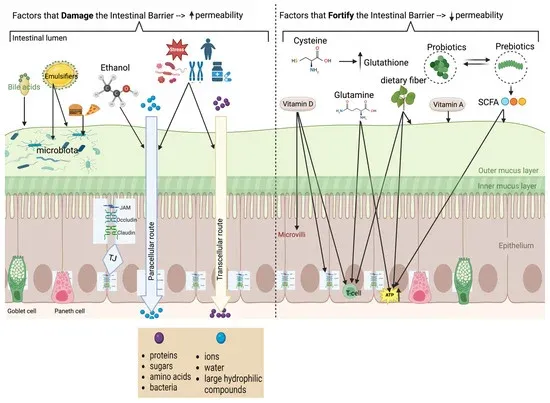
Supplemental L-glutamine supports tight junction repair, reduces permeability, rebuilds the mucus layer, and strengthens gut-associated immune tissue. The best way to think about glutamine is the same way you think about protein after training: it’s not a magic fix, it’s repair fuel.
Without it, regeneration slows. With it, the process becomes far more efficient.
Animal based sources include: beef, lamb, pork, poultry, salmon, tuna, cod, & shellfish.
Plant based sources include: Legumes like kidney beans, lentils, chickpeas, & soybeans. Vegetables like spinach, kale, red cabbage, parsley, corn, & asparagus. Almonds, sunflower seeds, oats, rice, & wheat are also great sources.
It is my humble opinion that real food, as opposed to supplements, are your best option to increase your intake of vital nutrients. This is because creating a regular and consistent diet of whole food options is the way to creating a sustainable lifestyle and a long term fix to your gut health.
You may need to experiment with plant based sources to decide what options work for you at your current level of repair but it is absolutely necessary to commit to incorporating plant based nutrition sources in your daily and weekly dietary intake.
Restoring the Gatekeepers
Many gut issues linger not because food is wrong, but because digestion upstream is weak.
Zinc plays a quiet but critical role here.
It supports gut barrier regeneration, enzyme production, immune resilience, and — importantly — stomach acid synthesis. When zinc is low, stomach acid drops. When stomach acid drops, food ferments instead of digesting. Fermentation leads to gas, bloating, dysbiosis, and inflammation.
For many people, restoring zinc is the difference between constant irritation and smooth digestion.
Calming Inflammation at the Membrane Level
Healing tissue requires calm signaling, not constant immune activation.
This is where omega-3 fatty acids — particularly EPA and DHA — come in. They stabilize cell membranes, reduce inflammatory cytokines, support microbiome diversity, and improve gut–brain communication.
This isn’t about mega-dosing or chasing numbers. It’s about restoring signal balance, so the gut can repair instead of defend.
Protecting the Lining While It Rebuilds
Some tissues need time without friction.
Slippery elm and marshmallow root produce a gel-like mucilage that adheres to irritated areas of the gut, shielding them from abrasion while stimulating healthy mucus production. These herbs don’t “fix” the gut — they protect it while it fixes itself.
In cases of significant irritation, this protection can make the difference between progress and constant setbacks.
Rebuilding the Microbiome Without Overwhelming Digestion
When digestion is sensitive, raw volume and aggressive fiber can backfire.
Low-fruit, high-fiber smoothies offer a middle ground. They provide soluble fiber, feed beneficial bacteria, increase butyrate (a primary gut-healing compound), and support hydration and mineral balance — all without overwhelming the system.
Used correctly, they rebuild tolerance instead of provoking symptoms.
Bringing It All Together
These tools work best when the broader environment supports them.
That means:
stress hormones are regulated,
movement is daily and moderate,
sleep is protected,
and irritants are genuinely removed.
When the gut lining heals, something important happens:
plant compounds stop triggering reactions,
fiber becomes tolerable again,
energy stabilizes,
and resilience returns.
The Final Word
The gut lining is regenerative — not fragile.
Repair requires materials, protection, and the right environment.
These tools support process, not suppression.
Healing the gut restores tolerance, not restriction.
Inner Circle truth:
When the gut is repaired, plants return to their rightful place — as nourishment, not enemies.
Ready to go deeper and discover a 90 day protocol?
Further reading: blog.awfitnessclub.net/the-90-day-gut-rebuild-protocol/