How to Control Blood Sugar Without Eliminating Carbohydrates
The Lie You’ve Been Told
If you’ve been diagnosed with diabetes, you’ve probably heard this:
“Cut the carbs.”
So you do.
You remove bread.
You avoid sugar.
You even start questioning fruit.
And yet…
- Your energy still crashes
- Your blood sugar still fluctuates
- Your body still feels off
Because here’s the truth:
Carbs aren’t the problem — your understanding of carbs is.
Carbs Aren’t What You Think They Are
One of the most common things I hear from clients is:
“I already cut out carbs.”
But when we break that down, what they really mean is:
- No bread
- No pasta
- No rice
- No sugar
…and often, no fruit.
That’s where the problem starts.
Because not all carbohydrates behave the same in your body.
🔴 Processed Carbohydrates (The Problem)



These include:
- White bread
- Pastries
- Soda
- Candy
- Packaged snacks
What they do:
- Enter your bloodstream rapidly
- Spike blood sugar aggressively
- Require a large insulin response
- Lead to crashes, cravings, and fat storage
These are the carbs that disrupt your system.
🟢 Whole Food Carbohydrates (The Solution)



These include:
- Fruits
- Vegetables
- Whole starches like sweet potatoes
What they do:
- Digest slowly because of fiber
- Provide hydration and micronutrients
- Create a gradual rise in blood sugar
- Support metabolism instead of overwhelming it
These are the carbs your body actually recognizes.
Why This Confusion Hurts Diabetics
When you remove all carbs—including fruit:
- You lose fiber (which stabilizes blood sugar)
- You lose hydration (which supports circulation)
- You increase cravings
- You create a system that isn’t sustainable
And what happens next?
You bounce between:
- Restriction
- Cravings
- Overeating
- Frustration
Sugar Is Not the Enemy — Mismanagement Is
Your body doesn’t just respond to how much sugar you eat.
It responds to:
- How fast it enters your bloodstream
- What it’s paired with
- Whether your body is using energy
- How your metabolism is functioning
That’s why:
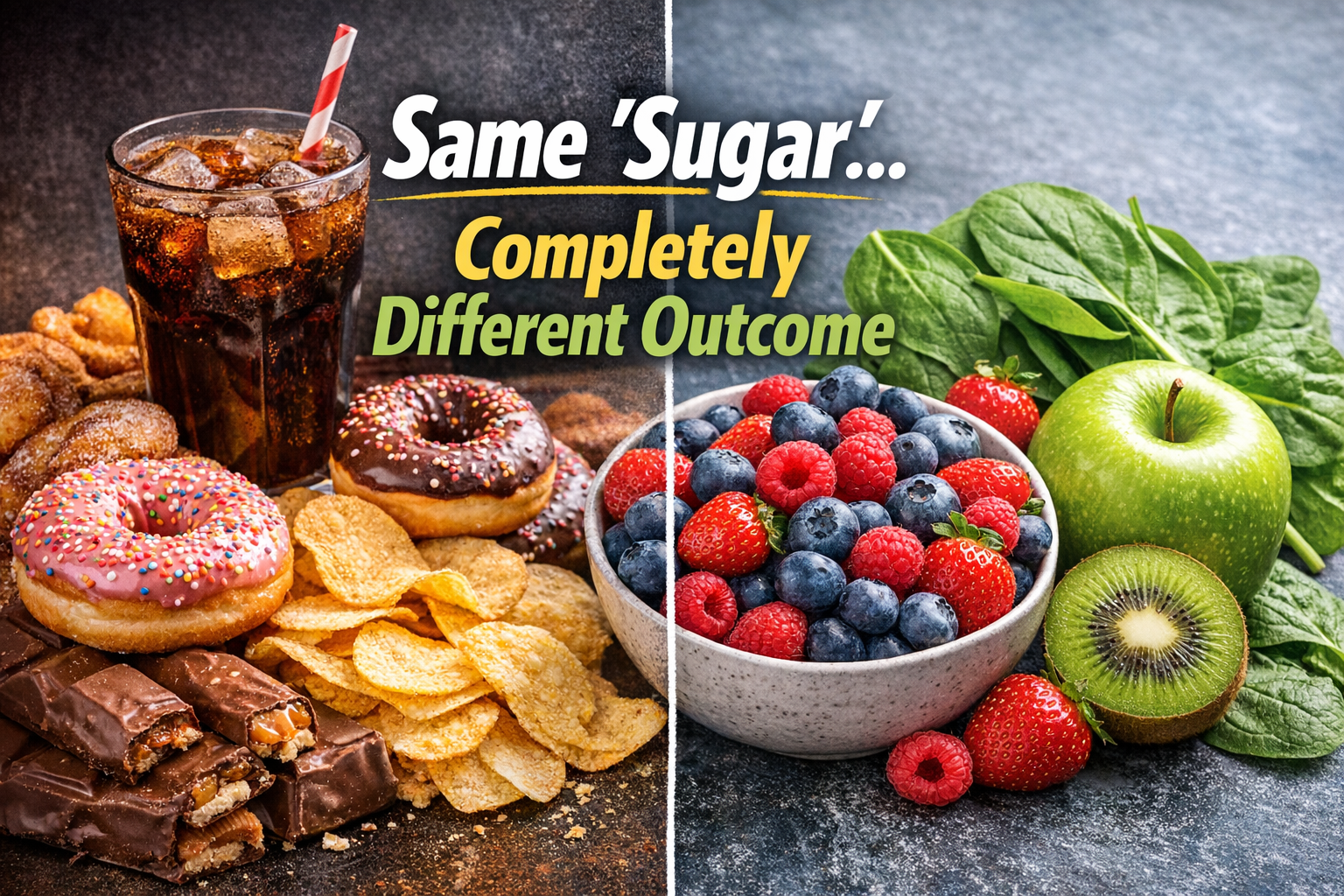
20 grams of sugar from soda ≠ 20 grams from fruit
Same number.
Completely different outcome.
Whole Fruit vs Processed Sugar
When you drink soda:
- Sugar hits fast
- Insulin spikes hard
- Energy crashes
When you eat whole fruit:
- Fiber slows digestion
- Water dilutes the sugar load
- Nutrients support metabolism
- Glucose enters gradually
Same “sugar”… completely different metabolic response.
Why Fruit Can Help Regulate Blood Sugar
When used correctly, fruit becomes an advantage.
1. Improves Insulin Sensitivity
Berries and whole fruits contain compounds that support glucose control.
2. Reduces Overeating
High water + fiber = fullness and fewer cravings.
3. Replaces Processed Sugar
When fruit becomes your default, processed foods naturally disappear.
The Fruit Timing Method (AW System)
Instead of eliminating fruit… we structure it.
🌅 Morning (Best Starting Point)
- Berries
- Green apples
- Kiwi
Low glycemic, high fiber, stable energy.
🕛 Midday (If Active)
- Oranges (whole)
- Pears
- Peaches
Best paired with movement or meals.
🏃🏽♂️ Post-Workout (Strategic Use)
- Bananas
- Pineapple
- Mango
Your body is primed to use sugar as fuel here.
🌙 Evening
- Vegetables
- Low-sugar fruits
Keep blood sugar steady as you wind down.
Why Movement Changes Everything (EBD)
Most people try to manage blood sugar with food alone.
But here’s the reality:
Blood sugar is not just a food problem — it’s a movement problem.
The Liver vs Muscle Problem
When you eat carbohydrates, your body has two main options:
The Liver (Storage Mode)
- Stores excess sugar
- Converts it into fat over time
- Becomes overloaded
The Muscles (Usage Mode)
- Burn glucose for movement
- Act as a metabolic sink
- Improve insulin sensitivity
Here’s the issue:
If you’re not moving, your liver does all the work.
And eventually:
- Blood sugar stays elevated
- Insulin becomes less effective
- The system breaks down
EBD: Turning Your Body Into a Glucose Engine
This is why I teach Exercise Bodyweight Daily (EBD).
Short, consistent sessions (under 30 minutes) that:
- Pull glucose out of the bloodstream
- Improve circulation
- Increase insulin sensitivity
- Take pressure off the liver
You’re not just exercising… you’re reprogramming how your body handles energy.
Why Daily Movement Matters More Than Intensity
Blood sugar is a daily issue.
So we solve it with a daily solution.
Not extreme workouts.
Just consistent movement that keeps glucose flowing out of the blood and into muscles.
Intermittent Fasting: Giving Your Body Time to Reset
Now we layer in timing.
Intermittent fasting helps by:
- Reducing constant insulin spikes
- Giving your body time to clear glucose
- Allowing stored energy to be used
Why Fasting + EBD Is So Powerful
When combined:
During fasting:
- Insulin levels are lower
- Your body becomes more sensitive to glucose
During movement:
- Muscles pull in glucose
- Stored energy gets used
- Blood sugar stabilizes
You create a system where your body uses energy instead of storing it.
The Real Goal: Shift Where Energy Goes
Most people live here:
- Eat carbs → liver stores → blood sugar spikes
We want this:
- Eat carbs → muscles use → blood sugar stabilizes
The Vegetables That Stabilize Everything
If fruit is your energy…
Vegetables are your control system.
Focus on:
- Leafy greens
- Cruciferous vegetables
- High-water vegetables
They:
- Improve digestion
- Reduce inflammation
- Stabilize blood sugar
What to Avoid (This Matters Most)
Most blood sugar problems don’t come from fruit.
They come from:
- Fruit juice
- Dried fruit (overconsumption)
- Processed snacks
- Liquid calories
- Eating without movement
The Real Problem Isn’t Carbs
It’s this:
You don’t have a system that teaches your body how to use them.
Simple Daily Protocol (Start Here)
- Hydrate first thing in the morning
- Start your day with fruit (low glycemic)
- Move daily (20–30 min EBD)
- Build meals around vegetables
- Replace processed snacks with whole foods
- Use a structured eating window
Stay consistent for 7 days and observe the shift.
Final Thought
“Your liver shouldn’t be doing all the work. Your muscles were designed to carry the load.”
And when they do…
Carbs stop being the problem — and start becoming fuel.
🔓 Next Step
If you want a step-by-step system that shows you exactly how to:
- Eat without tracking calories
- Train in under 30 minutes at home
- Improve your energy and metabolic health
Inside my program, I walk you through it day by day.
No guesswork. No extremes. Just structure.