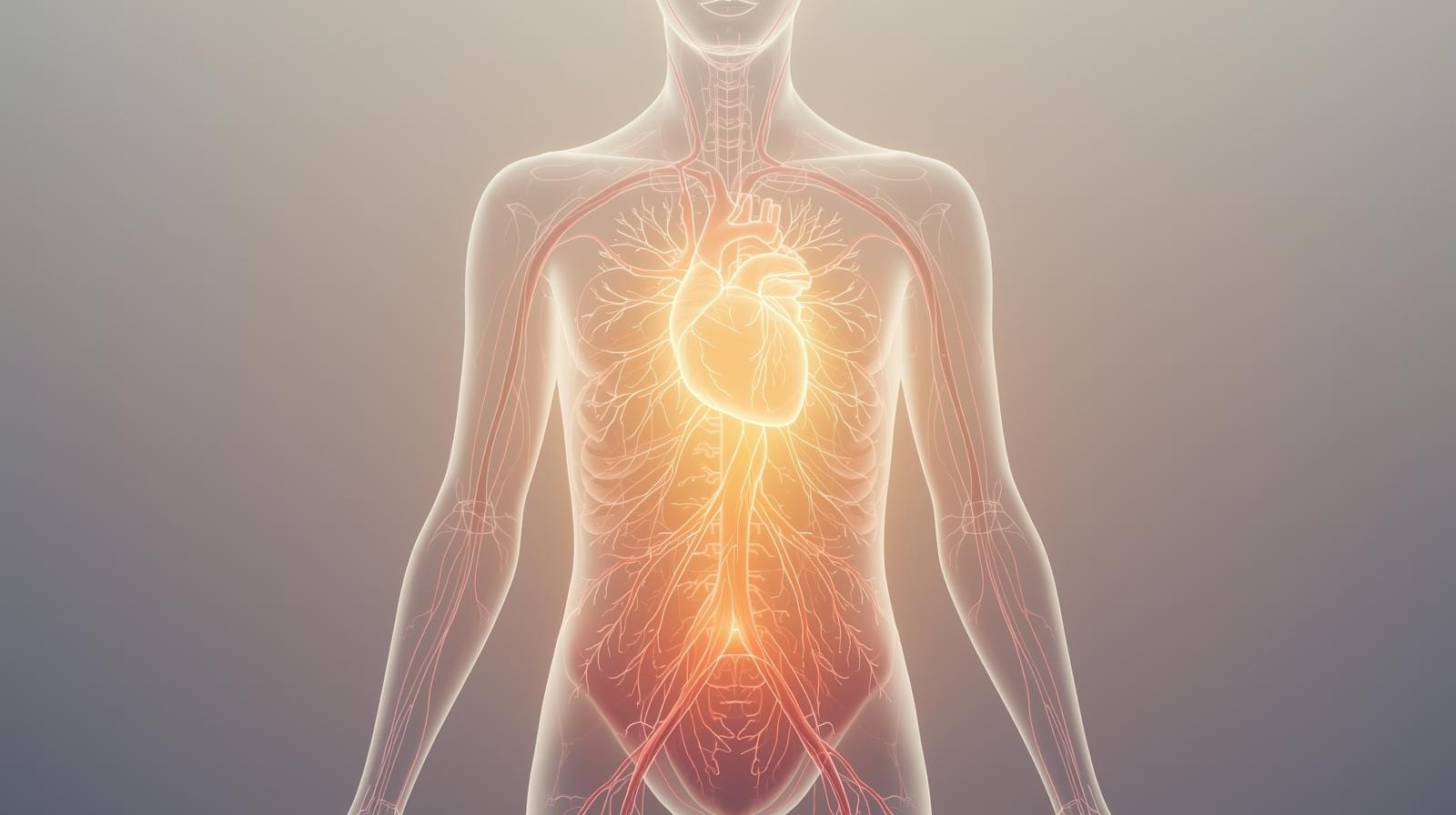
Why libido and orgasm reflect your energy and circulation
Most people don’t connect sexual health with metabolism.
They think libido is about mood.
They think orgasm is about chemistry or connection.
But your sexual vitality is one of the clearest signals of how well your body is producing and moving energy.
It’s not separate from your health.
It’s downstream of it.
Energy Comes First
Every cell in your body runs on energy.
Your mitochondria take oxygen and nutrients and turn them into usable fuel. That fuel powers your brain, your hormones, your blood vessels, and your nervous system.
When energy production is strong, your body has surplus.
When energy is low, the body shifts into conservation mode.
Reproduction is not essential for survival.
So when energy feels tight, the body quietly lowers libido first.
That’s not aging.
That’s prioritization.
What Happens When Energy Drops
When mitochondrial output slows down:
- Hormone production becomes inconsistent
- Dopamine (the drive and motivation chemical) weakens
- Nitric oxide drops
- Blood vessels stiffen
- Stress rises
- Recovery slows
Desire fades gradually.
Many people blame stress or age.
Often, it’s energy.
The Circulation Piece: Nitric Oxide
Sexual arousal is a blood flow event.
Nitric oxide (NO) is a molecule that tells blood vessels to relax and widen.
When nitric oxide is strong:
- Blood flows easily
- Tissue fills and becomes more sensitive
- Arousal builds naturally
When nitric oxide is low:
- Blood flow is restricted
- Sensitivity drops
- Orgasm becomes harder to reach
This isn’t “in your head.”
It’s circulation.
How It Shows Up in Men
In men, nitric oxide allows blood vessels in penile tissue to relax and fill.
Erectile dysfunction is often one of the earliest warning signs of poor vascular health. It can show up years before heart disease.
Testosterone also depends on strong mitochondrial function, good sleep, stable blood sugar, and low inflammation.
If energy and circulation decline, libido follows.
How It Shows Up in Women
In women, the same principle applies.
Clitoral and vaginal sensitivity depend on blood flow and nitric oxide signaling.
When circulation weakens, women may notice:
- Slower arousal
- Less lubrication
- Reduced sensitivity
- Orgasms that feel muted or harder to sustain
Estrogen supports nitric oxide production. When estrogen drops — or when metabolism is under strain — blood flow can decline.
Different anatomy.
Same system.
The Nervous System Matters Too
Sexual function requires a relaxed nervous system.
Arousal happens in a parasympathetic state — calm, safe, regulated.
Chronic stress pushes the body into fight-or-flight.
High cortisol lowers nitric oxide.
Low nitric oxide reduces blood flow.
This is why how well you sleep, breathe, and regulate stress matters just as much as hormones.
Why This Belongs in Fitness
If you improve circulation, sexual vitality improves.
If you improve mitochondrial function, libido improves.
If you support your blood vessels, responsiveness returns.
This isn’t about performance.
It’s about system health.
Sexual function reflects:
- Cardiovascular integrity
- Endocrine balance
- Energy production
- Nervous system regulation
It’s one of the earliest markers that something is off.
It’s also one of the most encouraging signs when things are improving.
The Practical Path
To support nitric oxide:
- Lift weights if that's your style
- Do interval training
- Move daily
- Eat leafy greens and beets
- Get sunlight
- Breathe through your nose
- Support magnesium levels
To support mitochondria:
- Eat whole foods
- Keep blood sugar stable
- Sleep deeply
- Train consistently
- Manage stress
The same habits that strengthen your heart strengthen your sexual vitality.
Because it’s the same system.
The Index Perspective
Libido isn’t just psychological.
Orgasm isn’t just emotional.
They are reflections of energy and circulation.
When mitochondria are strong, when blood vessels are flexible, and when hormones are stable — vitality shows up everywhere.
Including down there.